
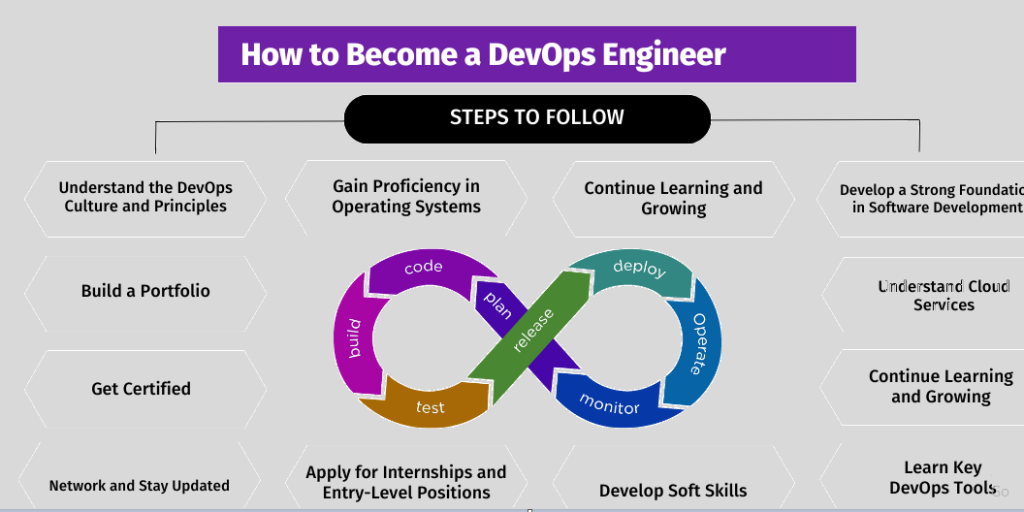
Introduction
The Certified DevOps Engineer (CDE) is an advanced architectural framework. It is the formal validation of an engineer’s ability to create a frictionless delivery pipeline. It is the bridge between a raw idea and a globally accessible product. A CDE-certified professional is a master of “The Flow”—ensuring that code moves from a developer’s brain to a user’s device with zero manual friction and maximum security.
The Economic Impact of “Zero-Touch” Automation
In today’s market, speed is the only currency that matters. If your competitor can release a fix in ten minutes while your team takes ten days, you have already lost. The CDE skillset focuses on Immutable Infrastructure and Continuous Delivery. This allows a company to innovate at the speed of thought. By removing human error from the deployment process, you aren’t just saving time; you are protecting the company’s reputation and bottom line.
Certification as a Risk Management Strategy
For an engineer, the CDE is your “Professional Insurance.” It proves you meet a global standard of excellence. For a manager, it is a Strategic Guardrail. In an era of complex cloud-native systems, you cannot rely on “tribal knowledge.” You need a team that follows a standardized, audited, and repeatable methodology to ensure that your production environment remains unbreakable.
2. Capability Evolution: Traditional vs. CDE
| Operational Aspect | The Old Way (Pre-DevOps) | The CDE Way (Modern) |
| Infrastructure | Manual Server Racking/Config | Infrastructure as Code (IaC) |
| Scalability | Vertical (Add RAM/CPU) | Horizontal (Elastic Clusters) |
| Deployment | “Scheduled Maintenance” | “On-Demand” (Zero Downtime) |
| Security | Perimeter Defense | Integrated (Security-as-Code) |
| Official Link | — | CDE Official Certification |
Provider: devopsschool.com
3. The Deep-Dive: Engineering the Modern Software Factory
Architecting the Pipeline
The CDE program is built to give you total control over the Software Factory. It begins with Version Control Mastery (Git), ensuring that team collaboration is seamless and every change is reversible. We then move into Containerization (Docker), which creates a “standard unit of software.” This ensures that if it works on a laptop, it will work exactly the same way on a massive cloud cluster.
Mastering the Orchestration Engine
The true power of a CDE professional lies in Kubernetes and Terraform. These tools allow you to manage thousands of microservices as a single, living organism. You will learn to write code that describes your servers, allowing you to recreate an entire data center in minutes if needed. This level of Disaster Recovery and Auto-Scaling is what justifies the premium salaries CDE professionals command.
Tactical Preparation Plans
To master this framework, you need a velocity that matches your experience:
- The 14-Day “Architect” Path: A high-intensity review for senior Cloud/SRE professionals who need to formalize their decades of experience.
- The 30-Day “Professional” Path: The gold standard. One week each for Linux/Git foundations, Containerization, Kubernetes Orchestration, and CI/CD Automation.
- The 60-Day “Foundation” Path: Designed for QA, Testers, or traditional Admins. This path includes deep-dives into networking and system logic before touching the automation tools.
Common Pitfalls: Why “Tool-Only” Learning Fails
The biggest mistake I see is engineers learning a tool (like Jenkins) without understanding the Pipeline Philosophy. Tools change; the logic of delivery remains constant. Never skip your Linux fundamentals, as the entire modern cloud is built on them. Avoid the temptation to “copy-paste” YAML files—type them manually to build the muscle memory required for real-world troubleshooting.
4. Training & Certification Support Ecosystem
Mastering these complex domains requires a specialized support structure. Each of these institutions provides a targeted lens into the world of automation:
- DevOpsSchool: The global hub for the CDE foundation and hands-on corporate engineering projects.
- DevSecOpsSchool.com: Focused on “Security-as-Code”—the essential practice of shifting security to the very start of the pipeline.
- SRESchool.com: Dedicated to high-availability and reliability principles—building systems that literally never crash.
- AIOpsSchool.com: For the future-focused engineer using AI to manage and predict infrastructure health automatically.
- DataOpsSchool.com: Bridging the gap for data engineers who need to automate complex big data and AI pipelines.
- FinOpsSchool.com: The “Business” side of the cloud—ensuring your automation is as profitable as it is fast.
- ScmGalaxy: The ultimate community vault for technical blogs and real-world troubleshooting guides.
5. The Path Forward: Beyond the CDE
Once the CDE foundation is in place, the industry expects you to specialize in high-impact niches:
- Certified Kubernetes Administrator (CKA): This is the master-level proof of orchestration. In 2026, CKA is the “gold standard” for anyone serious about the cloud.
- Certified DevSecOps Professional: The intersection of automation and security. This is currently the most profitable niche in the engineering market.
- DevOps Leader (DOL): For those moving into management or a CTO role, focusing on the cultural and strategic side of organizational change.
6. Deep-Dive: The Financial and Market Reality of CDE
Becoming a CDE-certified engineer is a massive “Professional Asset.” In India, certified professionals see their value rise from 8 LPA to 30+ LPA. Globally, the range is between $120k and $185k+. This isn’t just because you know tools—it’s because you solve the most expensive problem in business: Inertia.
The program is designed to be Tool-Agnostic. While you learn Jenkins and Terraform, you are actually learning the Philosophy of Automation. This means you can adapt to any toolset a company uses. It is the definitive bridge for people from manual backgrounds to move into high-paying, remote-friendly architectural roles that are in high demand across every sector—from Finance to Gaming.
7. FAQs: Direct Professional Insights
- Is Linux mandatory?
Yes. It is the fundamental “OS” of the modern cloud. You cannot be an architect without it. - How much coding is required?
You need to understand logic and scripting (Python/Bash/YAML), not necessarily build complex mobile apps. - How long is the actual learning curve?
Most professionals complete the transition in 3 to 6 months of dedicated learning. - Is the CDE exam hard?
It is practical and lab-based. If you have done the hands-on practice, you will pass. - What is the first tool to learn?
Git and Linux are the absolute first steps for any automation path. - Can I work in the US/UK with this cert?
Yes. The CDE follows global standards, making your skills highly portable across borders.
8.Testimonial
“I spent years manually updating servers. After my CDE, I wrote a script that does it for me. Now I spend my time designing new features instead of fixing old ones.”
— Rahul Sharma
“The difference in my salary was immediate, but the difference in my job security was even better. I am no longer a ‘cost’ to the company; I am a ‘value-add’.”
— Priya Iyer
“As a manager, I only hire CDE-certified pros. It is the only way to ensure our platform is built on a foundation of reliability and global standards.”
— Amit Verma
Conclusion: Building Your Legacy
The Certified DevOps Engineer (CDE) is a total mindset shift. In an industry moving this fast, staying still is moving backward. I’ve seen hundreds of engineers transform their careers by simply committing to this path. Mastering these methodologies is the best investment you can make—providing long-term stability, higher pay, and the satisfaction of building systems that actually work at scale.
