
Introduction
In many software companies, two groups live in separate worlds. The development team writes code and wants to launch new features as fast as possible. The operations team keeps the servers running and wants to keep the system stable and secure.
When something breaks, these two groups often blame each other. Developers say, “It worked fine on my computer.” Operations says, “Your code crashed our servers.”
This conflict slows down projects, frustrates clients, and stresses out workers.
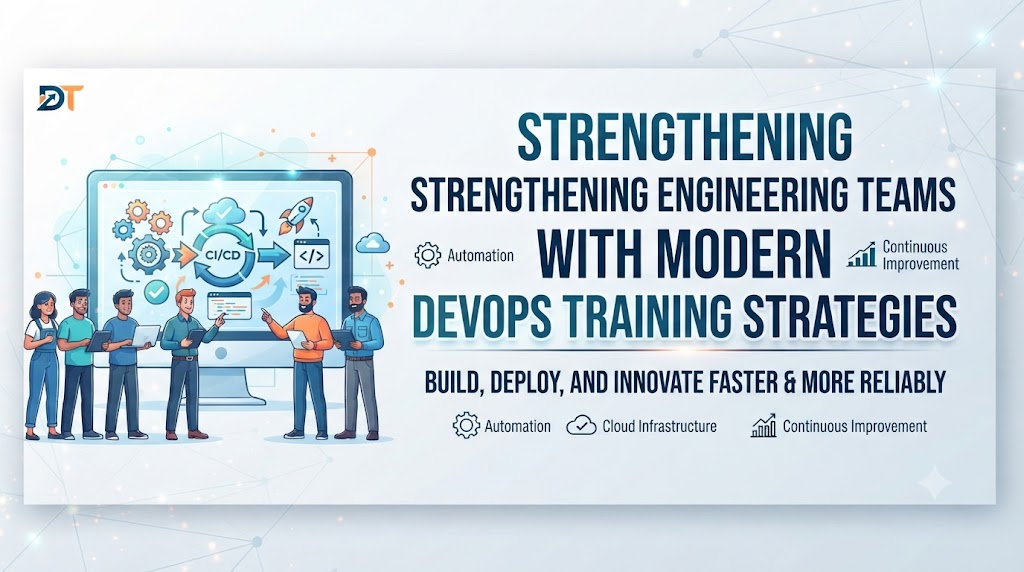
DevOps training solves this problem. It teaches both sides how to speak the same language, use the same automation tools, and share responsibility for the final product. This guide explores how proper training transforms divided workers into high-performing engineering teams.
What Is DevOps Training?
DevOps training is an educational program that teaches technical staff modern software delivery practices. The term DevOps combines Development and Opserations.
In simple terms, DevOps is a way of working where writing code, testing it, and running it on servers happen as one continuous, automated process.
Why It Matters
Traditional software development splits work into rigid phases. Developers hand off code to testers, who hand it off to operations. This causes massive delays when bugs appear late in the cycle. DevOps training teaches teams to automate testing and deployment so that code reaches users safely and in minutes rather than months.
Example
Imagine a restaurant kitchen. In a traditional setup, the chefs cook without talking to the waiters, leading to cold food and angry customers. DevOps training is like teaching the entire kitchen and dining staff to communicate constantly, coordinate orders, and work together so every meal is served hot and fast.
How DevOps Training Bridges the Gap Between Teams
The core goal of DevOps training is cultural and technical alignment. Here is how it brings teams together:
1. Eliminating Departmental Silos
Training programs teach individuals that software delivery is a team sport. When developers learn how servers operate, they write code that is easier to maintain. When operations staff learn how code is written, they can help troubleshoot bugs faster.
2. Standardizing Workflows
Training introduces shared tools and standardized processes. Everyone uses the same version control systems, automated testing frameworks, and deployment pipelines. This removes guesswork and reduces human error.
3. Fostering a Culture of Shared Responsibility
In a DevOps culture, nobody says, “That is not my job.” Training instills the mindset that if a system goes down, the entire team works together to fix it, rather than pointing fingers at a single department.
Key Benefits of DevOps Training for Engineering Teams
Investing in structured DevOps education delivers clear, measurable advantages for both individuals and the wider organization.
Faster Software Delivery
Teams learn how to use Continuous Integration and Continuous Delivery ($\text{CI/CD}$) pipelines. This means code updates are tested and pushed to live servers automatically, reducing release cycles from months to days.
Higher System Reliability
By learning automated monitoring and testing techniques, teams catch bugs before they reach customers. This leads to fewer system crashes and less downtime.
Better Problem-Solving Skills
Training exposes engineers to real-world failure scenarios. When a server crashes or a deployment fails, trained teams know how to diagnose the root cause quickly using logs and monitoring dashboards.
Improved Job Satisfaction
Constant finger-pointing and emergency bug fixes burn out engineers. DevOps training replaces chaos with automated, predictable workflows, creating a calmer and more satisfying work environment.
Important Factors to Understand Before Training
Before launching a DevOps training program for an engineering team, leaders must evaluate a few key factors:
- Current Skill Gaps: Assess what your team already knows. Do they understand basic cloud computing, or do they need fundamental instruction before learning advanced automation tools?
- Tool Selection: Avoid teaching too many tools at once. Focus on industry standards for version control, containerization, and automation.
- Hands-On Practice: Theory alone does not work in engineering. Training must include labs where teams build and break pipelines in safe sandbox environments.
Common Mistakes Organizations Make
Many companies try to adopt DevOps without proper training, leading to frustration and wasted money. Avoid these common traps:
- Treating DevOps as Just a Tool: Companies buy expensive automation software without teaching staff how to change their daily habits. Tools only help if the team knows how to collaborate.
- Training Only One Person: Sending a single engineer to a training course does not change company culture. When they return, they remain surrounded by colleagues who still use old methods. Train whole squads together.
- Rushing the Learning Process: DevOps involves many concepts like security integration, containerization, and infrastructure automation. Cramming everything into a two-day seminar leaves teams confused.
Risks and Limitations of Training Programs
While education is vital, training alone is not a magic fix for broken organizations.
- Resistance to Change: Experienced engineers who are comfortable with old habits may resist new workflows. Overcoming this requires patient leadership and clear communication.
- Skill Decay: Technology changes quickly. If teams do not apply what they learn immediately on real projects, their new skills will fade.
- Loss of Productivity During Learning: Taking engineers away from active project work to attend training courses can slow down current feature releases temporarily.
Decision Framework for Implementing Training
To build a successful training path for your engineering team, follow these steps:
- Assess Team Needs: Identify whether your bottleneck is slow testing, deployment errors, or poor communication between departments.
- Choose the Right Format: Decide between self-paced online courses, intensive bootcamps, or customized corporate workshops.
- Start Small: Run a pilot training program with a single engineering squad before rolling it out company-wide.
- Measure Success: Track metrics like deployment speed, bug recovery time, and team feedback after the training finishes.
- Encourage Continuous Learning: Provide ongoing access to learning resources so engineers can keep up with new technology trends.
Key Terms
- Continuous Integration ($\text{CI}$): The practice where developers frequently merge their code changes into a central repository, where automated tests run to catch bugs early.
- Continuous Delivery ($\text{CD}$): An automated process that ensures code changes can be safely released to production at any time with a single click.
- Containerization: A technology like Docker that packages software code and all its dependencies together so it runs reliably on any computing environment.
- Infrastructure as Code ($\text{IaC}$): Managing and provisioning computer data centers through machine-readable definition files rather than physical hardware configuration.
- Feedback Loop: The process of gathering data on how software performs in the real world so teams can improve future code updates.
FAQs
What is DevOps training?
DevOps training is an educational program that teaches development and operations teams how to use automation tools and collaborative practices to build and release software faster and more reliably.
Do beginners need coding experience before taking DevOps training?
Basic understanding of programming, operating systems, and command-line interfaces is helpful, but many introductory courses cater to professionals stepping into the field from various technical backgrounds.
How long does it take to learn DevOps?
Learning timelines vary based on prior experience. A foundational understanding can take a few weeks, while mastering advanced automation and cloud tools often takes several months of hands-on practice.
Why do engineering teams struggle without DevOps training?
Without training, development and operations teams remain isolated in silos, leading to miscommunication, slower release cycles, and frequent finger-pointing when system errors occur.
Does DevOps training replace traditional IT experience?
No. DevOps training builds upon existing technical skills, helping engineers apply their knowledge more efficiently within modern, automated environments.
Conclusion
Strong engineering teams do not happen by accident. They are built through clear communication, shared goals, and the right technical education.
DevOps training does more than teach software tools; it changes how people work together. By breaking down departmental walls, automating repetitive tasks, and teaching teams to share responsibility, organizations can build products faster, reduce system failures, and create happier, more confident engineering teams.

